Are you wondering what daily life in Greenwood Village actually feels like beyond the map pin and property photos? If you are comparing south metro communities, this city often stands out for its polished feel, strong outdoor access, and mix of residential calm with business convenience. Understanding how it functions day to day can help you decide whether it fits your lifestyle, commute, and long-term plans. Let’s dive in.
Greenwood Village at a Glance
Greenwood Village is an 8.3-square-mile city in Arapahoe County just south of Denver. The city reports 15,691 residents, along with a daytime population of about 38,500, which tells you right away that this is both a residential community and a major employment center.
That blend shapes daily life. You get neighborhoods with a lower-density feel in many parts of the city, while also having office districts, transit access, dining, and retail woven into key commercial areas. Greenwood Village also reports a 2023 median household income of $145,781 and a 78.9% bachelor’s-degree attainment rate among adults 25 and older, which reflects its established professional profile.
Everyday Feel in Greenwood Village
One of the most noticeable things about Greenwood Village is that it does not feel one-note. Some areas lean more rural and quiet, while others place you closer to trails, offices, restaurants, and light rail. That variety is part of what makes the city appealing to buyers who want options within one address.
City planning documents show an intentional effort to preserve single-family character while balancing it with multifamily and mixed-use development in select areas. In practical terms, that means Greenwood Village can feel more spacious and residential than many close-in suburbs, while still offering convenient access to daily needs.
For many buyers, this is the sweet spot. You are not choosing between purely suburban living and purely urban convenience. In Greenwood Village, you often get a measured mix of both.
Parks and Trails Matter Here
If outdoor access is part of your lifestyle, Greenwood Village gives you a lot to work with. The city maintains more than 440 acres of parks, trails, and open space, along with about 40 miles of trails.
That network supports walking, running, biking, and even horseback riding. The city also includes 5.47 miles of the High Line Canal Trail, which adds another well-known outdoor connection for residents who value easy recreation close to home.
Signature parks and open space
Greenwood Village has several parks that shape everyday life in different ways. Marjorie Perry Nature Preserve is the city’s most significant open-space area, known for its quiet setting and Rocky Mountain views.
Village Greens Park is another standout for day-to-day use. It includes playing fields, a playground, picnic tables, restrooms, and a hike-and-bike trail connection to the state park.
Westlands Park and Silo Park are also part of the city’s family-friendly park system. Together, these spaces give residents multiple options for a quick walk, a weekend outing, or a simple break outdoors.
Active recreation options
Orchard Hills Park brings together a wider range of amenities in one place. The park includes tennis courts, a pickleball court, a small playground, a fishing pond, a rock-climbing garden, a hike-and-bike trail, and a stable.
That matters because it adds flexibility to your routine. Whether you want a structured activity, a casual outing, or a park with multiple features in one stop, Greenwood Village offers more variety than many people expect.
Equestrian access is unique
Greenwood Village also has a feature that is unusual in the Denver metro area: visible equestrian infrastructure. The city lists dedicated equestrian parks and crossings, and Alexander Lane Equestrian Park includes a trail course, cross-country course, and riding arena in the Rural Homestead neighborhood.
This helps explain why parts of Greenwood Village feel distinct from other south metro communities. The city’s rural roots are not just historical context. In some areas, they are still part of everyday life.
Arts, Culture, and Community Amenities
Outdoor living is a major part of Greenwood Village, but it is not the whole story. The city also supports cultural and recreational amenities that help daily life feel more rounded and polished.
The Curtis Center for the Arts offers classes, rotating exhibits, lectures, and events. Greenwood Village also has a public art program, which adds visual interest to public spaces and community areas.
Another notable benefit is the city’s recreation reimbursement program. Greenwood Village says qualifying households may receive up to $550 annually for eligible recreational activities, which can add practical value for residents who actively use local programs.
Dining, Shopping, and Errands
Greenwood Village does not center around one traditional main street. Instead, daily errands and dining tend to happen in commercial nodes tied to business districts, mixed-use areas, and transit-accessible corridors.
The city’s economic development materials identify part of the Denver Tech Center, Greenwood Plaza, and the Village Center as major activity areas. For residents, that means practical convenience is spread across the city rather than concentrated in one single downtown-style district.
The Landmark DTC lifestyle factor
The Landmark DTC is one of the clearest examples of Greenwood Village’s more upscale amenity base. Its official materials describe it as a destination for dining, shopping, entertainment, health, and wellness services, along with luxury condos, Comedy Works, and high-end retail and restaurant options.
For buyers, this matters because it adds another dimension to daily life. You can have a home base in a quieter residential area while still being close to polished restaurants, entertainment, and service businesses when you want them.
Commuting and Getting Around
Greenwood Village is especially appealing for people who want strong regional access. Interstate 25 runs through the city, and I-225 sits just outside its boundaries, making it easier to connect to downtown, the south metro, and east-west routes.
The city also places a high priority on transportation as a quality-of-life issue. That is an important point if your work, school, or routine depends on moving around the region efficiently.
Light rail access
Greenwood Village has three light rail stations within city boundaries: Arapahoe at Village Center, Orchard, and Dayton Street. Arapahoe at Village Center is a park-and-ride with 817 parking spaces and access to bus routes 153, 169, 66, and AT, along with the E and R rail lines.
Orchard Station serves the E and R lines and has 48 parking spaces. RTD also serves the area with FlexRide options, which can help with first- and last-mile trips between neighborhoods, stations, and commercial areas.
Can you live car-light here?
In limited pockets, yes. If you live near station areas or mixed-use commercial corridors, you may find it easier to rely less on a car for some daily trips.
That said, most residential areas remain suburban and lower-density. For many households, Greenwood Village still functions best with a car, even though transit access is stronger here than in some nearby communities.
Airport convenience
If travel is part of your life, Greenwood Village offers practical access on that front too. The city says Denver International Airport is about 35 minutes to the northeast, and Centennial Airport is about 10 minutes east.
Housing Patterns and Neighborhood Character
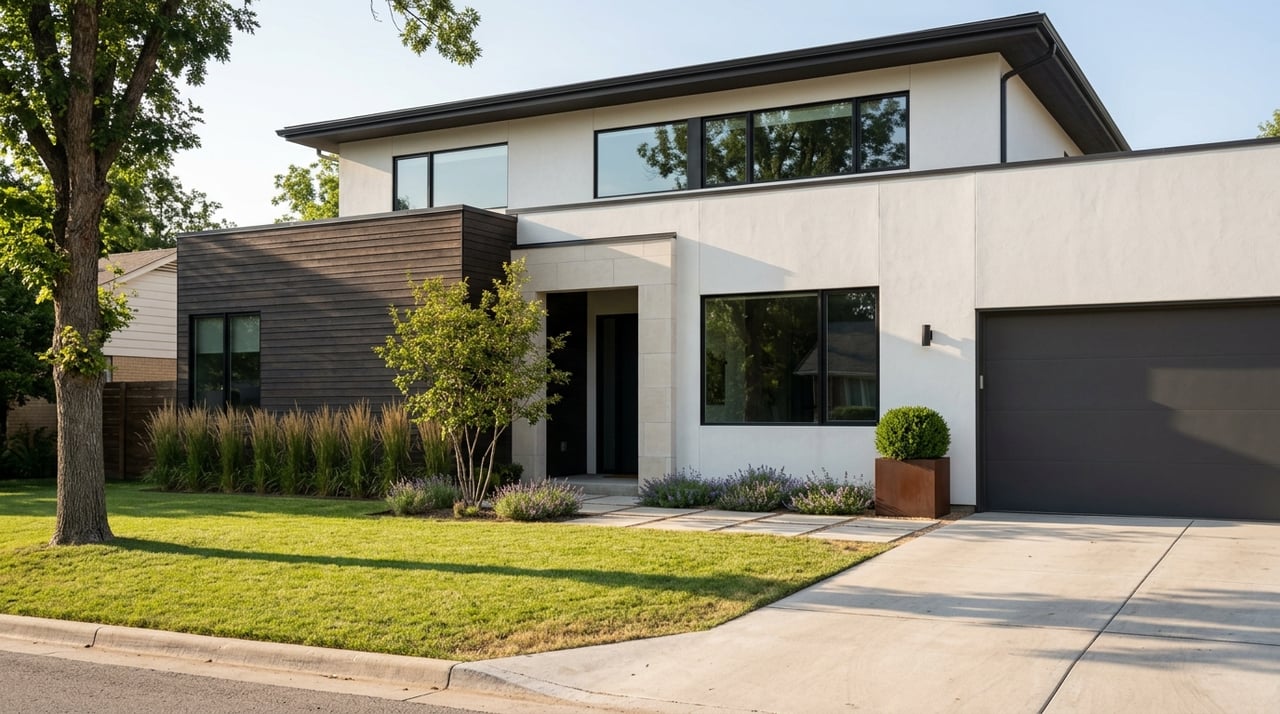
Greenwood Village is mostly made up of detached single-family homes. The city’s 2026 budget describes the housing stock that way, and Census QuickFacts reports an owner-occupied rate of 64.1% and a median value of $1,237,800 for owner-occupied housing units in the 2020 through 2024 period.
For buyers, those numbers reinforce what many people already sense in person. Greenwood Village is an established, high-value market with a strong single-family foundation.
Not every area feels the same
One reason Greenwood Village attracts long-term buyers is that it offers distinct residential planning areas rather than a uniform feel. The city’s Comprehensive Plan identifies seven principal residential planning areas, and they vary meaningfully in density, lot pattern, and lifestyle feel.
Rural Homestead is the clearest example of the city’s lower-density side. The plan describes it as an area of single-family dwellings, horse pastures, gravel roads, and very low density, averaging 0.4 dwelling units per acre.
Cherry Creek feels different. It is still mostly single-family, but more developed, with larger lots to the south, smaller lots to the north, and average density of 3 to 5 dwelling units per acre.
Sundance/Orchard Hills highlights another version of Greenwood Village living. The city notes its direct access to open space and trail corridors, with connections to the Denver Tech Center, Greenwood Plaza employment centers, the Village Center, transit, and surrounding neighborhoods.
Schools and Long-Term Planning
For households planning ahead, school boundaries are an important part of the conversation. Greenwood Village says Cherry Creek School District serves the east side of Holly Street, while Littleton Public Schools serves the west side.
The city also notes that the Cherry Creek campus in Greenwood Village includes district offices, Greenwood Elementary, Campus Middle School, and Cherry Creek High School. As with any home search, district and attendance details should be verified directly during your decision-making process, but the citywide boundary split is useful context when narrowing your options.
Why Buyers Consider Greenwood Village
For many buyers, Greenwood Village works because it delivers a balanced lifestyle. You can find strong outdoor amenities, a polished dining and retail base, regional commuting access, and neighborhoods with clearly different personalities.
It also offers a sense of long-term fit. If you want a community with mostly detached homes, meaningful trail access, and a location tied closely to both employment centers and everyday convenience, Greenwood Village often belongs on the shortlist.
This is especially true if you value a neighborhood decision that supports both lifestyle and property strategy. In a market like Greenwood Village, the right fit often comes down to matching your routine, commute, and housing priorities with the right part of the city.
If you are thinking about buying or selling in Greenwood Village, working with a local advisor who understands neighborhood differences, pricing, and positioning can make the process much clearer. To explore your options with a strategic, personalized approach, connect with Hanh Chung.
FAQs
What is daily life like in Greenwood Village, Colorado?
- Daily life in Greenwood Village blends lower-density residential living with convenient access to parks, trails, business districts, dining, and regional transportation.
Does Greenwood Village have good parks and trails?
- Yes. Greenwood Village maintains more than 440 acres of parks, trails, and open space, along with about 40 miles of trails for walking, biking, running, and horseback riding.
Is Greenwood Village a good place for commuting?
- Greenwood Village offers strong regional access through Interstate 25, nearby I-225, three light rail stations within city limits, and access to RTD bus and FlexRide services.
Can you live without a car in Greenwood Village?
- In some station-area and mixed-use pockets, you may be able to live somewhat car-light, but most residential areas are still suburban and lower-density, so many households rely on a car.
What types of homes are common in Greenwood Village?
- Detached single-family homes make up most of the city’s housing, with some multifamily and mixed-use housing in selected planning areas and corridors.
Are there different neighborhood feels within Greenwood Village?
- Yes. Greenwood Village includes planning areas with very different character, from the rural, low-density feel of Rural Homestead to more developed single-family areas like Cherry Creek and trail-connected areas like Sundance/Orchard Hills.
Which school districts serve Greenwood Village?
- According to the city, Cherry Creek School District serves the east side of Holly Street, while Littleton Public Schools serves the west side.