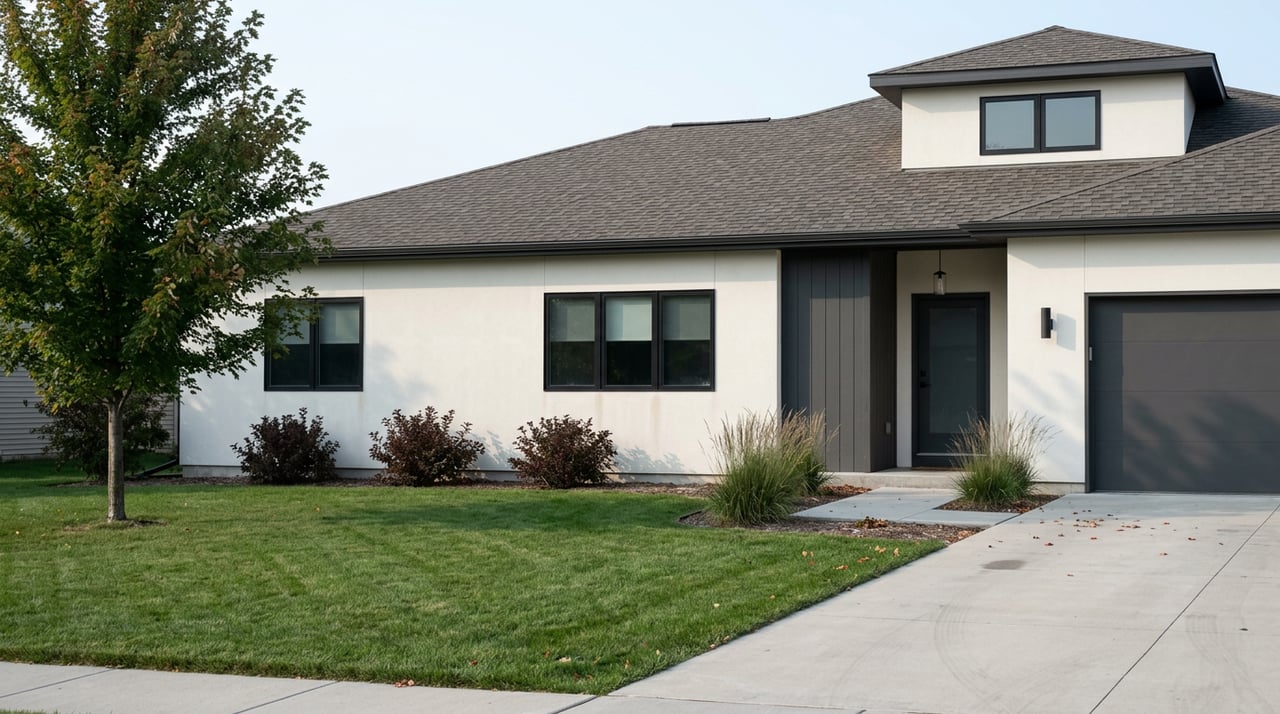
When two Castle Pines listings land within a few thousand dollars of each other, what question do you ask next? Most buyers compare square footage, lot size, maybe the school boundary. Almost nobody asks whose debt they are about to start paying off, because that question does not appear on a listing sheet, a Zestimate, or a Redfin comp. It appears on a mill levy certification filed with Douglas County, and it can shape a homeowner's tax bill for decades after closing.
Castle Pines carried a median sale price of $999,000 over the three months ending in May 2026, up 12.8 percent from the same period a year earlier, with homes averaging 31 days on market. Movoto's June 2026 figures show the same $999,000 median but a slower 93-day average time to sell, up from 70 days the year before, alongside 217 homes sold that month. Those numbers describe a healthy, competitive market. They say nothing about what happens after you sign, because the price tag and the tax bill are set by two entirely different clocks.
The Line Item That Isn't on the Listing Sheet
A mill levy is one dollar of property tax for every $1,000 of a home's assessed value. It sits underneath the sale price, set independently by whatever taxing entities cover that specific parcel: the county, the school district, and in most newer Colorado subdivisions, a metropolitan district formed under Title 32 of the state statutes to finance roads, water, and sewer infrastructure before a single resident moves in.
The City of Castle Pines itself collects 4.5 mills for law enforcement, passed directly to the Douglas County Sheriff's Office, plus 12 mills for parks, recreation, trails, and open space, according to the city's own taxation page as posted in April 2026. Those city mills are the same no matter which part of Castle Pines you buy into. The metro district mills are not, and that is where the real spread opens up.
Add one more wrinkle before you trust any online price history. Colorado is a non-disclosure state, so the sale prices shown on national portals are algorithmic estimates rather than recorded transaction data. Actual comps live in the MLS, not the public record, which means the number a buyer sees on a portal listing and the number a seller actually received can differ more in Castle Pines than in many neighboring Denver suburbs.
Why an Older Castle Pines Home Got Cheaper to Own
Castle Pines North Metropolitan District was formed in 1984 to finance the original infrastructure for what is now the City of Castle Pines. In 1991, after an early-1990s housing downturn slowed development and starved the district of expected tax revenue, it filed Chapter 9 bankruptcy and spent the next three decades under a court-supervised repayment plan.
That history matters today because of what happened next. In 2023, the district signed an intergovernmental agreement transferring its parks, recreation, and stormwater responsibilities to the City of Castle Pines, which by then had the staff and budget to take them on. The district's operations mill levy dropped from 19 mills to 7 mills as part of that handoff. The district's 2026 budget filing confirms the operations levy is now capped at 7 mills under that agreement, and recent filings show the district's certified levy running as low as 3.5 mills, a fraction of where it sat a few years earlier.
In practical terms, a home built decades ago inside the original Castle Pines North boundary is now sitting behind a metro district that has largely finished paying for itself. The debt is old. The bankruptcy is settled. The mill levy has nowhere to go but flat or lower.
| Castle Pines North Metropolitan District | Mill levy |
|---|---|
| Pre-2023, while funding parks and stormwater | 19 mills |
| 2023 onward, after transferring those duties to the city | 7-mill operations cap |
| Recent certified levy | as low as 3.5 mills |
The Other Side of the Ledger
Now compare that to a newer phase of construction. In The Canyons, the active new-build corridor of Castle Pines, a metro district can add a meaningful mill-levy cost that new-construction buyers do not always see coming, since the infrastructure bonds that paid for those roads and pipes are typically still early in their repayment schedule rather than near the end of it.
Statewide, developers are currently seeking mill authorizations in the range of 70 to 95 mills for new Colorado service plans, two to three times what an established, decades-old district like Castle Pines North collects today. When a metro district first organizes, the developer and its affiliates usually hold every board seat, because they are the only people who own property inside the boundary. From those seats, they set the debt ceiling, approve the bonds, and in some cases buy the bonds themselves, collecting interest for years before the first homeowner ever casts a vote.
"Seen a lot of kind of shady dealings by metro districts over the years."
That is state Sen. Lisa Frizell, a Castle Rock Republican, describing the pattern statewide, not a claim about any specific Castle Pines district. It is a fair description of why the years before residents arrive matter so much. A district's debt-service mill levy is fixed by bond covenants for the life of the bonds, regardless of who owns the home when the bill arrives.
This is also why Colorado tightened disclosure rules. For any residential sale closing on or after January 1, 2024, an owner of property inside a metropolitan district organized after January 1, 2000 must provide the buyer with that district's official website before closing. It is a small requirement with an outsized purpose: making sure the mill levy conversation happens before the offer, not after the first tax bill.
What This Means Before You Write an Offer
Castle Pines Village adds a separate layer worth understanding on its own terms. The Village operates under the Castle Pines Homes Association, a master HOA created in 1981 that oversees 19 sub-associations across roughly 1,900 homes on 2,800 acres, staffed by five full-time employees and more than 100 resident volunteers. HOA dues there, commonly $300 to $600 a month depending on the sub-association, fund the five staffed gates and the community's amenity package. That is a homeowners association cost, distinct from a metro district's property tax mill levy, and buyers sometimes conflate the two.
Before comparing two Castle Pines properties on price alone, ask for:
- The parcel's specific metro district name and its current certified mill levy, not just the city's mills
- Whether that district still owes debt, and if the seller's disclosure includes the district's official website as required for districts formed after 2000
- Whether the home carries HOA dues on top of, or instead of, metro district charges, and which sub-association those dues belong to
- Closed comps pulled from the MLS rather than a portal estimate, given Colorado's non-disclosure status
None of this shows up in a median price. All of it shows up in the first tax bill.
Frequently Asked Questions
Is a metro district the same thing as an HOA? No. A metropolitan district is a quasi-governmental entity that finances public infrastructure through property tax mills, while an HOA is a private association funded by member dues for community upkeep and amenities. A single property can sit inside both.
Does Castle Pines Village have its own metro district? Yes, in addition to its HOA structure. The Castle Pines Village Metropolitan District provides water, wastewater, roadway maintenance, and stormwater services, separate from the Castle Pines Homes Association that governs the community's covenants and amenities.
Will an established Castle Pines home's mill levy ever go back up? The district's own public communications describe no plans for new mill levies, with the debt levy expected to hold until the underlying obligations mature. That is not a guarantee for every district in the area, only a description of where Castle Pines North's finances stand today.
How do I find out which district covers a specific address? Ask for the metro district disclosure required at closing, or request the district's official website reference from the listing agent before you write an offer. That single document tells you more about long-term carrying cost than the list price ever will.
A price comparison only tells half the story in a market shaped this much by history. If you are weighing two Castle Pines homes and want the tax and district picture behind each one before you write an offer, Hanh Chung can walk through the specific numbers with you and put together a clear valuation for whichever side of that comparison you are standing on.