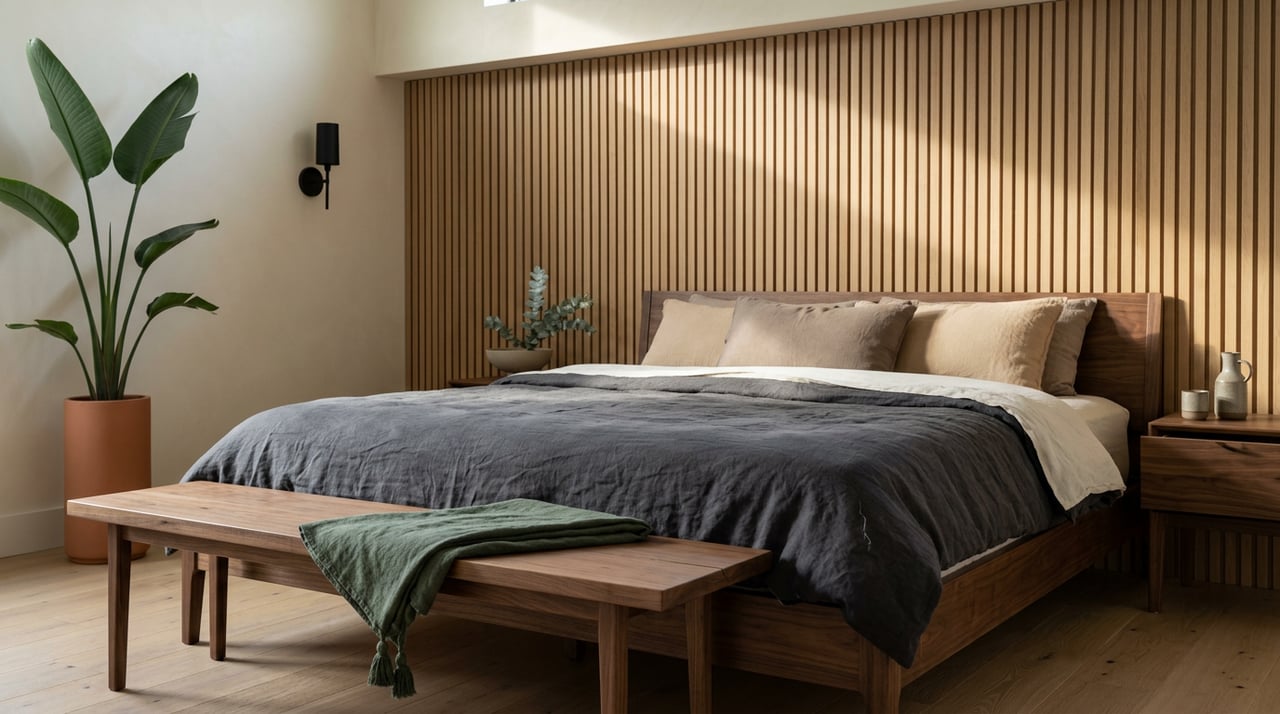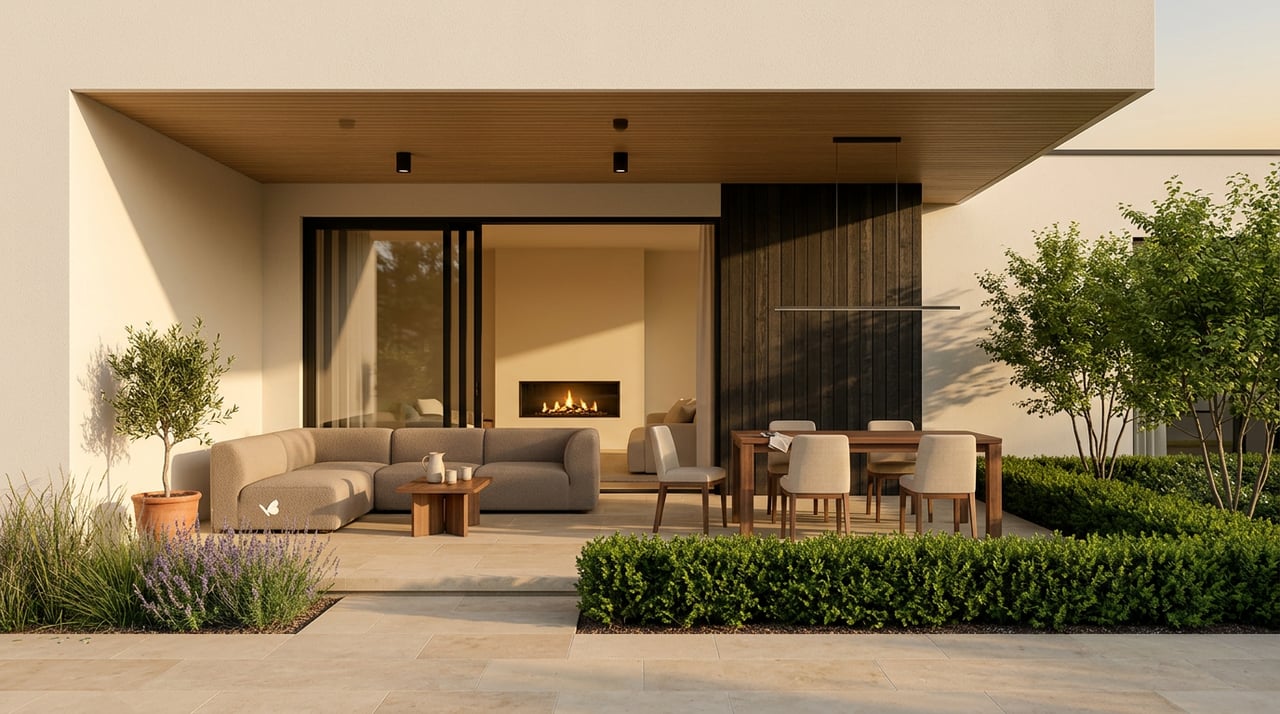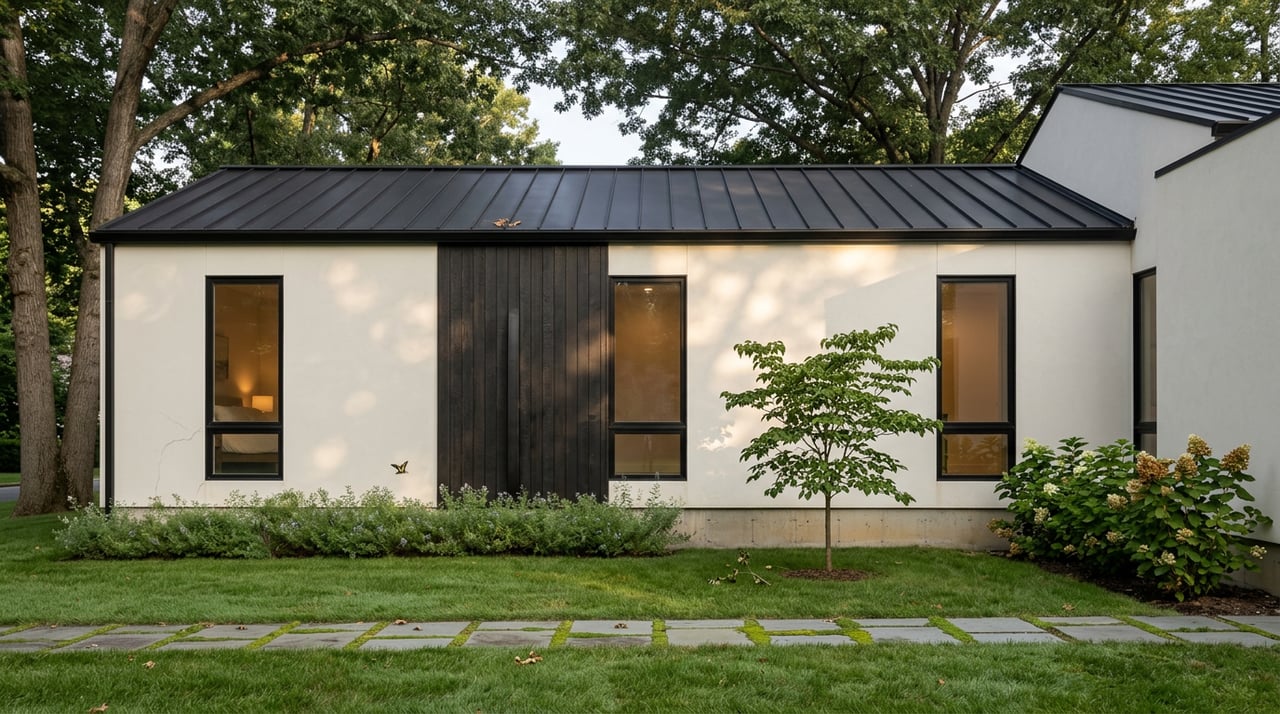
A buyer comparing south metro neighborhoods on a portal in June 2026 saw a Greenwood Village median list price of $1.48M, down about 7% year over year, with a median 45 days on market. That number is accurate. It is also close to useless. The same $1.48M can describe a 1978 ranch waiting to be scraped, a mid-tier attached townhome near the Denver Tech Center, or a partial down payment on an acre in The Preserve. These three markets sit inside the same zip codes and move on different clocks.
The thesis of this post is narrow. The Greenwood Village median blurs three parallel micro-markets whose days-on-market, price behavior, and negotiation dynamics have quietly diverged in 2026. Which tier a buyer or seller is standing in matters more than the city-wide headline.
The three markets hiding inside one median
Greenwood Village's housing stock is not uniform. It runs across custom estates on half-acre to acre-plus lots concentrated in The Preserve, Greenwood Acres, and Green Oaks, then a mid-tier of established mid-century and ranch subdivisions in pockets like Sundance Hills, and finally a smaller pool of attached condos and townhomes clustered near the DTC core. The city's zoning map codifies this range, with residential districts stepping from R-.05 PUD through R-2.5 for the largest lots.
Each tier is running on its own supply and demand curve this year.
| Tier | Typical product | June 2026 behavior |
|---|---|---|
| Custom estates ($1.5M+) | Half-acre to acre-plus lots, gated enclaves, mature canopy | 75+ days on market common, price reductions of 5% to 8% |
| Mid-tier ranches ($900K–$1.5M) | 1970s and 1980s single-family, teardown candidates | Wide range; buyers price against land value, not the house |
| Attached near DTC (under $900K) | Condos, townhomes, low-maintenance | Faster movement, sub-$500K bracket in the broader metro still seeing multiple offers |
The metro backdrop makes the split sharper. REcolorado's June 2026 report shows Denver Metro at 19 median days in MLS and a $614,000 median sale price, with active inventory representing roughly 13 weeks of supply. Greenwood Village runs longer and heavier at the top, which is why the city-wide median obscures more than it reveals.
The estate tier is on its own clock
The estate market above $1.5M is where the divergence is easiest to see. Luxury inventory in this bracket across Cherry Creek, Greenwood Village, and Lone Tree cooled noticeably through spring, with many listings sitting past 75 days and price reductions in the 5% to 8% range becoming routine. That is not distress. It is the tempo of a market where the buyer pool is small, decisions are deliberate, and scarcity of the specific lot matters more than headline pricing.
Scarcity is the constraint that estate buyers plan around. A recent Preserve listing custom-built by Koelbel and held by one family for three decades, sitting on a large lot backing to open space along Greenwood Gulch, is the kind of configuration described as almost never coming available in that section. When it does, the negotiation is not really about the current comp set. It is about whether an equivalent lot will surface again in the buyer's five-year window.
Sellers in this tier who priced against 2022 comps have had a hard 2026. Sellers who priced against the specific corner of Greenwood Acres or the specific view from Green Oaks have generally done better, because the estate buyer is buying land, canopy, and adjacency, not price per square foot.
The teardown floor under the mid-tier
The middle of the market runs on a different mechanism entirely. Greenwood Village is going through a slow lot-by-lot transformation as 1970s and 1980s ranch homes are scraped and replaced. New construction ranges from about $1.2M for a custom infill to over $4M for a full teardown rebuild on a half-acre lot, with 15 to 25 new-construction listings typically available across the city at any moment. Boutique firms like Godden Sudik Architects partner with construction teams on the high-end custom work, while larger names such as Ashton Woods and Oakwood Homes take on the more accessible end.
This creates a hard floor under mid-tier resale pricing. A tired ranch on a half-acre in a scrape-viable pocket is not competing with other tired ranches. It is competing with the builder math. Labor, materials, and permit fees have kept construction costs firm even as broader resale softened, which is why new-build pricing in Greenwood Village barely dipped through 2025 and into 2026. If the lot supports a $3M finished build, the dirt will hold a value that the surface condition of the existing house cannot fully suppress.
The friction for a seller in this tier is that two buyer pools are bidding on the same address for different reasons. An end-user family wants the house, prices the kitchen, and flinches at the roof. A builder wants the lot, ignores the kitchen, and reads the setbacks. Listing strategy has to pick a lane. Marketing the property to both audiences at once tends to leave money on the table with each.
What The Village at Landmark actually signals
On June 4, 2026, Century Communities broke ground on The Village at Landmark, a 90-home gated community on a 13-acre site directly south of The Landmark district. Homes will range 3,280 to 4,500 square feet, include basements and three-bay garages, and offer features like private elevators and rooftop living spaces. Pricing is expected between $1.7M and $3M, with sales beginning in spring 2027 and model construction later this year. The developer described the location as one of Denver Metro's most limited and tightly regulated submarkets, per Century Communities.
The interesting read is not the pricing. It is the volume. Ninety detached homes arriving into a submarket that typically absorbs new supply one teardown at a time is a structural event. For an estate buyer in The Preserve, it changes almost nothing. For a mid-tier buyer choosing between a scraped-and-rebuilt ranch and a new-construction alternative with rooftop living and walkable access to shopping and Club Greenwood, it introduces a real substitute. For a seller planning to list a comparable size home in 2027 or 2028, it adds ninety pieces of comp inventory that did not exist before.
That is the practical use of the announcement. Not "new luxury homes are coming." Rather, one specific segment of the Greenwood Village buyer pool now has an option that was not on the table six months ago, and pricing strategy for anyone selling into that same segment has to account for it.
Where the transaction actually gets tricky
The three-tier structure creates friction points that do not show up on a portal summary. A buyer moving from a national platform's median-price view into an actual contract runs into address-specific questions that shift the real cost and complexity of ownership:
- Association structure varies by pocket. A large-lot estate may sit in a voluntary neighborhood association with modest dues, while an attached unit near the DTC may carry a full HOA plus a metro-district property tax mill levy. The monthly carry can differ by a factor the listing sheet will not surface.
- School boundaries need primary confirmation. Greenwood Village splits between Cherry Creek School District and Littleton District 6 depending on address. Confirming enrollment eligibility with the district directly, not a portal, is the only reliable path.
- Scrape viability is a title and setback question. Whether a lot supports a viable rebuild depends on current setbacks, easements along the High Line Canal in places, and any covenant restrictions layered on top of zoning. A ranch that looks like a teardown on paper is not always one in practice.
- Comparable set has to be tier-specific. Pulling comps against the city-wide median produces noise. An estate on Greenwood Gulch does not comp against a ranch in Sundance Hills, and neither comps against a DTC-adjacent townhome, even when the list prices are similar.
Sellers face a mirror version of these questions. Pricing an estate against luxury cooling data yields one answer, pricing a scrape candidate against builder economics yields another, and pricing an attached unit against metro-wide sub-$500K momentum yields a third. The wrong reference class costs weeks and often points off the sale price.
Questions this raises
Is the Greenwood Village market softening? The top tier above $1.5M has clearly cooled in 2026, with longer days-on-market and routine reductions in the 5% to 8% range. The mid and lower tiers are running closer to the broader metro pace. Calling the whole city "soft" mixes those signals into a number that describes no actual buyer's experience.
Does the Village at Landmark project change existing home values? Not directly, and not for estate holders. For sellers of 3,000 to 4,500 square foot homes in the $1.7M to $3M range planning to list in 2027 or 2028, it introduces a new competitor with rooftop living and gated positioning. That is a comp set consideration, not a valuation event today.
How should a buyer read the $1.48M median? As a starting question rather than an answer. The relevant number is not the city median. It is the median for the specific tier and pocket the buyer is actually shopping, adjusted for lot, canopy, and scrape viability where relevant.
The Greenwood Village market rewards precision. A buyer or seller who identifies the correct tier before comping tends to price sharply, negotiate from the right reference class, and close on terms that a city-wide median would never predict. That is the work worth doing before an offer goes out. To discuss how these tier dynamics apply to a specific address or a specific search, reach out to Hanh Chung for a free home valuation and a strategy conversation grounded in the pocket that actually matters.